

The fugitives sword, p.1
The Fugitive's Sword, page 1
part #1 of Lord's Learning Series


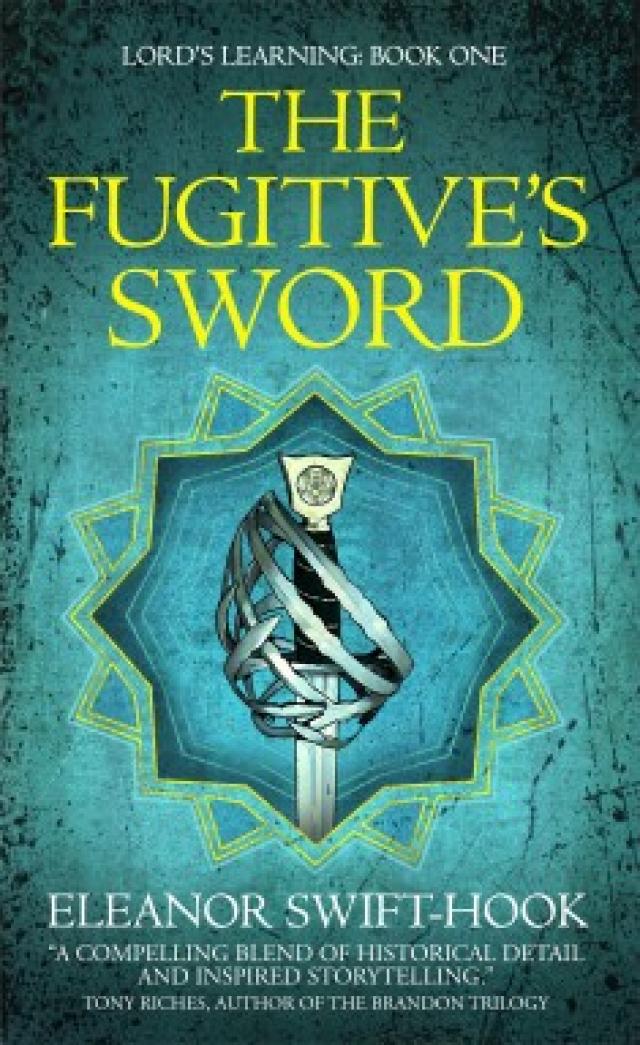
The Fugitive’s Sword
Eleanor Swift-Hook
Cover art by Ian Bristow of Bristow Design
Copyright © Eleanor Swift-Hook 2024.
The right of Eleanor Swift-Hook to be identified as the author of this work has been asserted by her in accordance with the Copyright, Designs and Patents Act, 1988.
Table of Contents.
Prologue
Chapter One
Chapter Two
Chapter Three
Chapter Four
Chapter Five
Chapter Six
Chapter Seven
Chapter Eight
Chapter Nine
Chapter Ten
Chapter Eleven
Chapter Twelve
Chapter Thirteen
Chapter Fourteen
Chapter Fifteen
Chapter Sixteen
Chapter Seventeen
Chapter Eighteen
Chapter Nineteen
Chapter Twenty
Chapter Twenty-One
Epilogue
Author’s Note
The Mercenary’s Blade
Other Works by Eleanor Swift-Hook
About the Author
Prologue
Theobalds House, Hertfordshire September 1624
King James stood, sweltering, by the blue marble fireplace beneath the hammer beam rafters two stories above him. The great hall of Theobalds House teemed with courtiers and servants. He wished the lot of them gone. A musician played in the gallery, but the music was melancholic. It had not helped James’ mood improve since he came in from hunting.
Neither had the letter in his hand.
That had been thrust at him as soon as he had alighted from his horse. He had ignored the importuning man who held it out, being eager to get inside to warmth and refreshment, and always aware that an assassin could be anywhere.
Being a king was dangerous in this age.
But then, James reflected, being a king was dangerous in any age.
Both his parents had died by violence and almost every king of his name, from the first King James two hundred years before, had met a violent end. Having reached his fifty-eighth year, longer lived than any of them, it was something James never forgot. It was also why he liked to wear well-quilted clothing when out in public. It might be enough to save him from an assassin’s blade, even if it felt tight over the paunch of his gout-ridden body and made him too warm.
The messenger had refused to be ignored. “From the Duke of Buckingham, majesty,” he insisted, raising his voice. “You said anything that came from his grace should be handed to you as soon as it arrived.”
Damnation, he had said that.
Turning back, James forced a grudging smile. He wasn’t pleased. He had hoped Steenie would come in person today. Besides, where once such a letter had brought him delight and comfort, more often than not now it left him with tight lips and a tighter heart as this one did.
He read it again as he stood by the hearth.
The letter was full of passion, but not like Steenie’s letters of old. There were few phrases of personal moment and little of his old affection. This was passion for a French marriage—equalling the ardour of a year and a half ago for one with Spain. But whereas James had been completely in favour of that project, this one with France he could not embrace. It would not bring peace. It would not further his grand mission to reconcile the divided religious factions of Europe.
Twenty years ago, he had ended the war with Spain, a war which his predecessor, Queen Elizabeth, had relished, and now if Steenie and Baby Charles had their way, that war would ignite again.
Catholic and Protestant. Such bitter enemies that it was hard to imagine they grew from the same tree, their struggle tearing Europe apart. As the son of a Catholic mother and king of a Calvinist nation since infancy, James knew he was born to be a peacemaker. He had always been pragmatic, well aware he might never reconcile the two sides. However, he could perhaps bring them to a truce. All his policies and plans had been aimed at that mark. Even using his family in the cause when he sought to wed his daughter to the Elector Palatine, the leading Protestant prince of Germany, and his son to the Infanta, beloved sister of the Catholic Spanish king.
The first part of that plan had gone well. Princess Elizabeth married Frederick, the Elector Palatine and she was, James understood, pleased by her marriage, even finding love with her husband. But despite that, it went horribly wrong. The Protestant estates of Bohemia, fearing persecution, elected Frederick to be their king. The young couple had been dazzled by the offer. Against James’ own strongly spoken and sound advice, Elizabeth and Frederick had accepted, adding the Bohemian crown to their existing Palatinate lands and titles.
No one, least of all James himself, had been surprised when Emperor Ferdinand, who regarded the throne of Bohemia as his by birthright, sent an army to Prague to drive them out and now it seemed all Europe was caught up in their war. Even James had been forced to raise troops to join the efforts to free the Palatinate, now occupied by the emperor’s orders.
Meanwhile, his daughter and son-in-law lived in exile in The Hague, deprived of both Bohemia’s crown and their princely Palatinate lands. But the Dutch Republic of the United Provinces had been fighting against dominion by the Spanish-ruled Netherlands for as long as James himself had been alive, so their presence there risked drawing England back into that endless war.
Spain.
Once the name had summoned thoughts of his old friend Diego, who had been the Spanish ambassador to England for many years. But there was little except pain left in the word for him now.
After the Bohemian debacle, a marriage alliance with the King of Spain, a close cousin to the emperor, became even more essential. It could bring the restoration of his son-in-law’s lost Palatinate lands, his grandchildren’s patrimony, without any need for war. That was the only reason he had agreed to a madcap plan of Steenie and Charles. The pair had travelled unescorted and incognito through France, arriving in Madrid completely unannounced, hoping to take the Infanta’s heart by storm with such a romantic gesture. But once they were there, everything went wrong, and his boys had returned changed.
Embittered.
Complaining they had been treated with contempt, neither would hear anything more about a match with Spain. They had changed in other ways too. Ways James had no liking for at all. Charles had come back a man with his own mind on matters about which he had once been content to be governed. Worse yet, he and Steenie had a new closeness forged in their shared adventure that sometimes made James feel an outsider.
Now it was France they both wanted for marriage. And Spain? They wanted war with Spain. Revenge for the slights and insults of the Spanish court.
That thought was a bitter one.
James resisted the urge to cast the letter he held into the fire. Shaking his head, he instead slipped it inside his quilted doublet to sit next to his heart. He needed to forget matters of state, forget Steenie and seek company that would take his mind off all such things.
“Can you find me the laddie?” he asked the nearest man.
“The laddie, majesty?”
“Aye, Philip. Philip Lord. Find him for me.”
The last time he had seen young Philip had been a couple of days ago. They had been playing chess and the board was still set out with their unfinished game. Philip had been his main comfort during the long months when Steenie and Charles had gone to Spain and remained so through the turmoil, recriminations, and arguments that had continued for the year since their return. He was a breath of fresh air when set against the courtiers whose company James usually had to endure, being free of their endless quarrels, petty jealousies and politicking. With youthful good looks and athleticism, he had arrogance and charm, an uncomplicated heart, and a young and eager mind that was quick-witted and open to learning the wisdom James could offer. Yes, Philip was exactly what James most needed that evening.
But he began to think he was to be denied even that.
In the end, he had to insist that the entire estate of Theobalds be turned inside out, but no one could find Philip Lord.
Much later, James sat alone at the chessboard in his private chambers, wondering. He picked up a pawn and held it gently in his hand. Then, getting up and ignoring the pain in his leg as he did so, he went to stand by one of the pictures on his wall.
A good likeness. A youth coming into his mid-teens, eyes a brilliant aquamarine, hair so fair it looked as pale as pearl. James studied the portrait, the pawn gripped in his hand, its shape impressed in his palm.
“What did they do to you?” he asked the young face in the picture, for in his heart there was no doubt that something ill had befallen the lad.
The portrait was silent.
Reluctantly, he turned away and called for his secretary so he could pen a reply to Steenie’s letter.
The pawn he put carefully back onto the gaming board.
Chapter One
It had been a wet and muddy September, with a lot of rain in recent days, but today the skies were clear and any man’s spirits should be uplifted. Matt Rider was sitting on a bench outside a tavern with a pipe in one hand and a letter in the other, as the sun chastised him for brooding. However, with no end to the siege of Breda in sight, he was beginning to wonder if he had made a bad mistake in being here and in Matt’s experience, bad mistakes cost lives.
The tavern stood in the remains of a tiny Dutch village not far from Breda ne ar the Brabant border. It had been engulfed by the counter-fortifications of their army as it advanced in besieging the city. Now the few houses that remained were quarters for himself and his men. He had come to sit here in the fresh air to get away from his worries, so he might enjoy a pipe and a beer in the rare autumnal sunshine and read a letter from his sister in London.
Written in a succinct hand more used to ledgers than letters, it struck him how his sister’s cheerfully banal and domestic news now seemed so remote from his own everyday experience of life. But then his experience was not exactly common. His mother had been a regular London innkeeper, his father had come from the Kingdom of Warri on the West African coast and his wife was an Irish horsetrader’s daughter. Added to that he was presently serving under the command of a German count, in the army of an Italian condottiero—the Marquess, Ambogio Spinola.
The army was vast. It already outnumbered the inhabitants and garrison of Breda by at least three or four times, and more men were arriving daily. The Marquess commanded soldiers from every corner of the empire, paid in Spanish gold to fight for the Archduke and Archduchess of the Netherlands against their rebellious northern provinces.
Yet even in such a diverse army, Matt was marked out not just by his dark skin and the long braids in which he wore his hair, but by his nationality. There were vanishingly few Englishmen in the Marquess’s command since this was an army fighting against one of the traditional allies of England.
Not surprisingly, as the siege works sprouted and spread over the fields about Breda, and soldiers poured in, only those civilians who could make money from the army remained. Women with a trade that soldiers would always pay for and men such as the owner of the tavern where Matt was presently sitting on this sunny afternoon. Yet Matt could see the day coming when that would end as the cold season bit and supplies ran ever shorter.
It was an unwelcome thought that took him back to his brooding.
He needed to find a way to leave the siege lines without voiding his contract, or when autumn turned to winter his company would be freezing, starving and deserting. That was the dark cloud hovering over him which even the bright, unseasonal sunshine could not banish.
The sound of hooves made him look up. One of Matt’s corporals, an Irishman called Ardghal O’Byrne, was riding towards the tavern, with four of his men. A cloaked figure mounted on a fine-looking bay rode with them, presumably part of the ongoing army expansion. As the independent captain of one of the few cavalry forces working with the siege troops, Matt was used to being sent all the flotsam with no specific allegiance, who were seeking to join the army and arrived equipped with a horse.
O’Byrne dismounted and started toward Matt. “We found this one, captain.” He put his hands on the table and leaned in, lowering his voice so it wouldn’t carry. “Well, I found him so can I have his horse? You’ll be wanting his sword yourself, I’m sure.”
Matt rapidly reassessed the mounted figure from recruit to prize. It was his rule that anything of value taken by a member of his company was brought to him so it could be put with the spoils and divided fairly. An essential rule as it both helped to provide for the company’s greater needs and prevented the kind of covetous envy that led to feuds and fights between the men. Any who did not abide by it knew he would at best be turned off or at worst hung for theft.
Folding his sister’s letter, Matt carefully tucked it away in his coat and looked over the figure on the disputed horse. The man wore a broad-brimmed hat low over his face and a heavy fustian travelling cloak that made it hard to see much of what lay beneath; but the horse was a fine creature, well furnished too, and that bespoke a wealthy owner—or perhaps a thief.
“You’d better bring him over then,” Matt said and tapped out his pipe on the table. He sat back on the bench leaning his shoulders on the wall of the tavern as the man dismounted.
Then he realised he was mistaken.
This was not a man, it was a boy. A boy no older than fifteen or sixteen if he was even that. Although he was well-grown, taller than many men already, his characterless face was smooth-skinned, waiting to be etched and moulded by life. His turquoise eyes were compelling and distinctive. His gaze was direct, confident, almost challenging, not that of any sort of petitioner. His bearing was bold—arrogant even—that of one used to being obeyed.
Beneath the heavy, encompassing cloak, which he threw back as he strode over, he wore clothes Matt thought would be more fitting for a court than the battlefield: fine brocade silk with slashed sleeves faced in a muted peacock blue. Silver points, two with tiny gemstones winking from them and the spurs on each of his finely-tooled boots were easily worth a month’s pay for any of Matt’s regular troops. Most outstanding was his hair. Long and straight and as white as an old man’s yet imbued with the lustre of youth. But for all that, it was his sword that drew Matt’s attention, and he knew the tug of covetous desire. No wonder Ardghal O’Byrne had said he would want it.
Matt started refilling his pipe thoughtfully, then looked up as the boy reached the table and stood frowning down at him.
“Are you in charge here? I wish to join the army.” He spoke impeccable Spanish. His voice had reached its lower, adult range, and now when he was closer, a thin tuft of hair that passed muster for a beard was visible on his chin.
Glancing at him briefly so the boy knew he had been heard, Matt went back to filling his pipe and tamping down the tobacco.
“I want a post in the cavalry. I have a horse.”
Matt lit his pipe and pulled on it a few times to be sure it had caught, exhaling the rich smoke with satisfaction. He could see O’Byrne and his men grinning where they stood by the horses.
“What post do you want?” he asked, wondering what he should do. This boy was clearly the son of some nobleman, who had stolen his father’s finest mount and favourite sword and ran away from home. It was most likely that the nobleman was already out looking for him—no man would want to lose such a blade or such a mount no matter what he might think of the child.
“An officer’s place,” the boy said, his expression showing he intended no jest by it. “I would be a cornet or a lieutenant.”
O’Byrne chuckled and there was a ripple of harsh laughter from his men.
“But not a captain?” Matt asked, ignoring the laughter.
“I understand I am not yet experienced enough to be a captain. That may take a few months. I am prepared to learn and wait.”
The laughter grew louder and the boy whipped around glaring at the men.
“And your name?” Matt was curious to hear what invention the boy might have.
“Schiavono,” he said, turning back to face Matt. “I am Filippo Schiavono.”
That was unlikely, but one name was as good as another as far as Matt was concerned. Many of his men had come from pasts where they had held other names and a few more had taken or earned a nom de guerre since joining the company.
“You are Italian?” Matt asked, switching to that language.
“Yes. Of course. I am from Milan,” The boy replied, doing likewise.
You may be, although I doubt it, but your Italian is certainly not. Whoever taught you came from Venice. But Matt let it pass and simply nodded, pulling on his pipe again. “That is a fine horse you have,” he said after he had breathed the smoke out, returning to Spanish. “How did you come by him?”
The boy hesitated. “He was a gift.”
Something in the slight halt as he spoke told Matt that this was the truth. The horse had been a gift. More than likely from someone the boy held in high regard and had now lost.
“A fine gift indeed,” Matt said, then pointed with the stem of his pipe. “And that sword? Was that a gift too?”
Schiavono’s hand shot protectively to the hilt. “The sword is mine,” he snapped. “I have had it for years.”
Not that many years. I doubt you could have even lifted it with one hand a few back. “So why do you want to join my company?”
O’Byrne was getting impatient. “We could take him on as a mochilero,” he suggested. “Like the Spanish have. A servant to do what we want.”
“He’s pretty enough to be one,” a voice from amongst the men behind O’Byrne agreed. The rest snickered and one made obvious gestures.






