

Hound, p.1
Hound, page 1


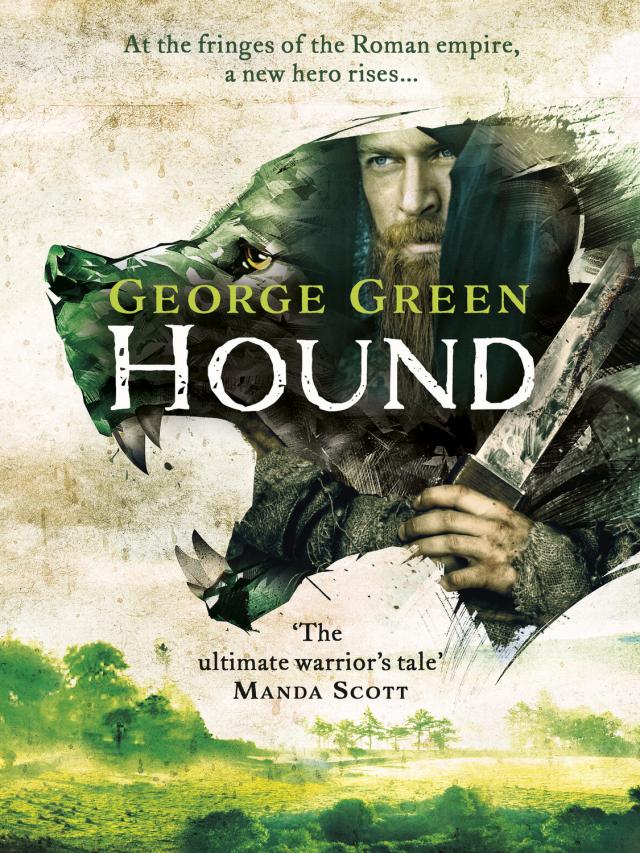
Hound
Cover
Title Page
Note on Pronunciation
Preface
Chapter One
Chapter Two
Chapter Three
Chapter Four
Chapter Five
Chapter Six
Chapter Seven
Chapter Eight
Chapter Nine
Chapter Ten
Chapter Eleven
Chapter Twelve
Chapter Thirteen
Chapter Fourteen
Chapter Fifteen
Chapter Sixteen
Chapter Seventeen
Chapter Eighteen
Chapter Nineteen
Chapter Twenty
Chapter Twenty-One
Chapter Twenty-Two
Chapter Twenty-Three
Chapter Twenty-Four
Chapter Twenty-Five
Chapter Twenty-Six
Chapter Twenty-Seven
Chapter Twenty-Eight
Chapter Twenty-Nine
Chapter Thirty
Chapter Thirty-One
Chapter Thirty-Two
Chapter Thirty-Three
Chapter Thirty-Four
Chapter Thirty-Five
Chapter Thirty-Six
Chapter Thirty-Seven
Chapter Thirty-Eight
Chapter Thirty-Nine
Chapter Forty
Chapter Forty-One
Chapter Forty-Two
Chapter Forty-Three
Chapter Forty-Four
Chapter Forty-Five
Chapter Forty-Six
Chapter Forty-Seven
Chapter Forty-Eight
Historical Note
Acknowledgements
Copyright
Cover
Table of Contents
Start of Content
Note on Pronunciation
Irish is different to English, and Ancient Irish is more different still. It seems harsh to ask a reader to learn a new system of spelling and pronunciation in order to be able to follow a story. Where a name has a recognizable equivalent in English I have used it. Thus Derdriu in the original (pronounced Der-dru) is here given as Deirdre. Maeve is the English spelling of Medb, and pronounced much the same. Where a name has no obvious equivalent, such as Setanta (pronounced Shay-dan-da), I have tried to use a form that is memorable for the reader.
For those (like me) who like to know such things, the following rough guide to Irish pronunciation may be useful. Bold type indicates a stressed syllable.
Ailill: Al-il
Cathbad: Kaff-a
Cuchullain: Koo-hull-in
Emer: Ay-ver
Ferdia: Fer-di-a
Laeg: Loygh
Naisi: Noy-shu
Sualdam: Soo-al-dav
Emain Macha: Ev-in Ma-cha
Iraird Cuillenn: Ir-ard Kwil-en
Sliab Fuait: Shlee-av Food-id
There are a dozen different ways to spell Shakespeare, but there is only one Hamlet. The Irish Heroes wished their names and their deeds to live for all time. So long as we remember them and tell their stories, we honour them. Even if we don’t say their names exactly right.
The story of Emain Macha, the palace of Conor the Great King of Ulster and the home of the Heroes of the Red Branch; and of Cuchullain, the Hound of Cullan; and Leary, his charioteer.
Especially his charioteer, born Sigmund the German, brought to Rome as a hostage by Tiberius, washed up onto Ulster.
Chapter One
There was sand in my mouth, and a hundred gentle arms were pulling me downwards.
I opened my eyes. A wave broke at my feet and rushed around me, sending freezing fingers up my body. I breathed water, and lurched up onto one elbow, choking. The water hissed back again, pulling a myriad of rattling pebbles past me down the beach.
I was lying at the sea’s edge, against a large rock covered with fat blue-black mussels. Rooted in the lee of the rock was a large clump of seaweed, lying in long greased-leather strips. They swirled round my legs like a witch’s hair as the water broke and foamed up the beach.
I was covered in stinging cuts and bruises, which made livid purple leeches on my wrinkled skin. Every orifice seemed to be stuffed full of seaweed and sand. I was alive, but I didn’t expect to be for much longer. I was a long way from home. If the cold didn’t get me, the Anthropophagi probably would.
The storm had blown out, but the sea was still a dark slate, restless under a stiff breeze. Shipwreck debris surrounded me. Without sitting up I could see half a dozen bodies, some bundled back and forwards on the tideline by the rolling waves, others thrown further up the beach, twisted into impossible shapes, faces down in pools of water.
The nearest was only a few feet away. I shuffled painfully across the sand and rolled him over. His face was shapeless and pulpy, the cheek framed by the outline of a dark bruise. The birds had already claimed his eyes. I turned aside and retched.
I struggled to my feet and saw a dozen more bodies. Some lay as if hurled from the Tarpeian cliff, huddled and broken. Others appeared unmarked, as if they rested, ready to sit up if I called. All of them were death-grey.
I left them to the gulls and walked up the beach to the dunes, where sharp-bladed rough-grass grew and the hard sand dried and turned to powder. The wind whipped it into stinging eddies around my feet. I picked up a rough length of driftwood for support, and used it to push myself upward as I waded through the sand to the top of the dunes.
The land behind the beach stretched flat for perhaps five stadia, and then great grey and purple mountains reared up on three sides of the valley. The plain was studded with bushes and trees and covered with rich dark grass. Not far away I could see a herd of cows were browsing. As I staggered over the top of the dune a few looked up at me, unconcerned, and went back to grazing. Their coats were thick and rough and their horns were cropped, as the Romans do to their animals, to avoid injury in the breeding season. My stomach ached at the sight of them. Domestic cows. Cows with milk.
I heard a noise behind me, the click of one pebble against another. I turned quickly, feeling every bruised muscle and frozen sinew protest at the sudden effort. A tremendous roar seemed to echo all around me. A human noise. Something cold and wet slapped into my face. I opened my mouth and then closed it again quickly, realizing that the thing that had hit me was an enormous cow-pat. I scraped frantically at the cowshit in my eyes. I managed to remove enough to see a couple of enormous figures descending upon me like rocks down a mountain. My flailing hands were brushed aside, a hand clamped onto my neck, my leg and arm were seized, I was lifted as if I were a struggling puppy, carried for a few moments and then flung through the air. Dumb with fright and blinded by cowshit, I flew for a moment and then landed with a splash.
Freezing water mixed with the cowshit and filled my eyes, ears and nose. My enemies were behind me, still roaring that guttural foreign-sounding war cry. Unable to see or even breathe, I whirled in the water for a few moments, hoping to land a lucky punch or two when they jumped in to finish me off.
The final blow failed to fall. Eventually it dawned on me that I was not under attack, that the water was only a few inches deep, and that the roaring that I had heard (and which I could still hear) was not a battle cry, just the sound of the large men’s coarse laughter. I stopped struggling, and sat miserably in my puddle, splashing water into my face to get the mess out of my eyes.
Three enormous men stood at the edge of the shallow pool into which they had hurled me. They could hardly stand for laughing. One of them – the largest one – was so overcome that he was doubled up, clutching at his midriff and gasping for air, pointing at me with a flapping hand. I found myself hoping that something painful and important was about to snap in his abdomen.
I could fall no lower. I could just accept that men are the Gods’ playthings and that on a good day they sometimes decide to let us live. I started to laugh. I shook with laughter. Then a shaking overcame me, became me. I felt myself start to fall, and then lost all sensation. I heard a shout and the splashing of running feet through water, felt a hand upon me, then numb darkness.
Chapter Two
When I arrived at Emain Macha, the castle of King Conor, Cuchullain was still called Setanta and he was far away and unknown. He was eight years old by then, but the story of his birth is part of it all, so I will tell it now.
* * *
His eyes were silver.
As Morag the midwife wiped the last clot of blood from his body with a soft cloth soaked in warm goat’s milk, he opened his eyes and looked up at her, unblinking. The midwife took a step backwards and held the child away from her body as if she feared infection. He looked back calmly, and then closed his eyes and seemed to fall asleep in her hands. His mother muttered softly in her sleep.
There was a pause, and then the midwife shook herself, as if she had dozed off in the heat of a summer’s afternoon with work still left to do. It is imagination, she told herself. You have accompanied hundreds of women to the birthing stool, buried a few who could not be helped, saved a dozen more who would have died if not for you. This is just a child like any other.
She knew it was a lie. This was not just any child. This was the child of Dectera, sister of Conor the Great King, wife of Sualdam, the chief of all his tribe. The blood of noblemen and Heroes ran in his veins. And there were rumours of more.
Morag looked around and shivered. The two women and the child were alone in the room. Would such a birth be so sparsely attended if this were just anoth er child? The, room should have been alive with women: virgins watching and learning; young mothers with the memory of their own deliveries fresh in their minds, full of sympathy and carrying warm towels; old women enjoying being past child-bearing age, sitting on wicker stools with folded hands and doling out endless advice; slaves carrying water and towels, and the whole adding up to a bright laughing time. Not like this, not alone, not in the half-light, not locked in with no help in a dark room as cold as a cave.
It was by order of the Great King himself that they were alone, and by his personal request that Morag stood by Dectera’s chair when no one else would do it for fear of what might happen. If he had ordered her to do it she might have found an excuse to avoid it, like the others had done. He did not try to order her, he asked her to do it for friendship.
Dectera stirred in her sleep and gave a soft cry. The birth had been hard. She had borne it silently, although her body had bent on the chair like a drawn bow with the pain. As soon as the child was born and she saw that he was healthy she had fallen asleep, exhausted. Morag washed the child in warm milk then placed him at her breast. Dectera’s arms came up and looped around him in her sleep. The midwife gently massaged Dectera’s soft belly until the afterbirth came, then inspected it carefully for signs of disease or unlucky marks. There were none.
The child coughed, and she picked him up to be sure that he was breathing properly. His silver eyes looked up at her again and she shivered. Perhaps the story was true.
She had heard the stories without paying attention. Conor and Dectera were, it was said by those with not enough to keep themselves busy, more like lovers than brother and sister. As children they preferred each other’s company to anyone else’s. Their father often joked that they would save him both time and dowry money, for he would have no need to look for marriage partners for them so long as they had each other. Of course, there were some who read a darker meaning into their love, and there was a hint of recognition of this in their father’s words. Few really believed the slanders, and certainly no one dared face Conor with them, but it was nonetheless a relief when Dectera’s engagement to Sualdam was announced. Those who had been cynical before remarked that the situation had hardly changed. Sualdam was Conor’s closest friend and lived close by, so Conor and Dectera could still see each other almost whenever they wished. However, it was enough that Dectera would at last be married, Sualdam’s wife, mistress of his castle, sharing his bed each night. The gossip would stop.
The day of the wedding was a bright spring morning. Conor had arranged to take Sualdam hunting, and a huge crowd rode with them, including every Champion in Ulster and every chief capable of throwing a leg over a horse. The hunt rode out noisily at high speed, leaving behind it a castle humming with preparations for the evening ceremony. Cooks, clothes-makers, carpenters, and a host of other necessary workers baked, sewed and sawed in a final frenzy of organization.
At the north-west corner of the castle stood a round tower. In time of war it was the central redoubt of the fort, but for the wedding it was Dectera’s bridal place. Fifty women, her attendants and friends, were gathered from all over Ulster to help her prepare. They stood her naked in the centre of the room, and, slowly and with much laughter, they dressed her.
First they placed over her a shift of lambswool, spun so thin that it was almost translucent, soft as the underside of a day-old moorhen’s wing and white as fresh sea-foam. Then they wrapped her in a sheet of the finest silk, all in one piece, and shot through with red, gold and green threads. The sheet was then pinned with a brooch of intricate silver wires which surrounded a great emerald at their centre, fastening it firm across her breast. The silk was the finest weave from Persia. It held her body kindly.
They then placed a headdress on her head made of sheer samite, pinned to her black hair which rose high from her forehead and then fell back across one shoulder in a loose rope. The samite was fastened to her hair at the back by a huge brooch made of shining gold, with seven emeralds gathered in a circle on it. The headdress was held close to her head by seven threads of soft white gold which flowed from the brooch, passing around her hair and the headdress to fall in twisted strands to the floor. The corners of the headdress were attached to the bottom of the silk dress, holding it just off the floor so that the breeze would catch it and raise it behind her. Bracelets lined her forearms in rings of red gold, white gold and silver, each with emeralds and rubies set deep into them, and on each upper arm was a white-gold circle as wide as a woman’s hand and with seven rubies around each edge.
On top of all this they placed a shawl made of Indian silk, light enough to fold up into a ball that could be hidden in a girl’s hand, but unfolding into a square bigger than the main door to the tower. This shawl was pinned to one shoulder by a brooch of silver with seven emeralds in a circle on it. A heavy gold tore with Ogham letters inscribed on it was placed around her neck, and from it hung a ruby the size of a blackbird’s egg which lay between her breasts like a live coal on a new linen pillow.
They brought her a sheet of polished metal, and she clapped her hands at her reflection and laughed. She reached for a cup of mead and drank a toast to her friends, not noticing that a mosquito lay on the surface of the mead. When she finished drinking, the insect was gone.
She put the cup on the window sill beside her and wiped the sweetness of the mead from her lips, then asked for her shoes. No sound answered her. Her friends all seemed to have fallen asleep. Those sitting had lain backwards and closed their eyes, those standing had just slipped silently to the floor. She was the only person in the room who moved or made any sound. She stood in confusion. A slight breeze moved a rich tapestry on one wall, making her step away from it nervously and then laugh, at herself, and then the light through the window cast a shadow in front of her as if the sun had appeared from behind a black cloud. Dectera sensed that someone else stood in the room. She whirled around, and then uttered a cry, stepping backwards in surprise and upsetting a table. Metal goblets crashed to the floor, spilling wine, but none of her friends woke.
Before her, dressed in his full glory, shining with gold and silver embellishments from every part of his armour and with a woollen cloak that was so light that it floated out rippling behind his shoulders even though there was no wind, stood Laeg, the Father of the Gods, smiling at her. She knew it was him, it could be no one else. Neither of them spoke for a moment. Then the God smiled and gestured at the goblet that she had just put down.
‘You drank.’ There was question and answer in his voice. She could only nod. She did not fear him, but she could not speak.
‘Then you are mine,’ said Laeg, ‘for the fly in the wine was me.’
Conor and the rest of the wedding party returned from the hunt shortly before dusk. Conor was bad-tempered because a boar had given him a cut on one leg before he had managed to kill it. His temper was not improved when the party rounded the last corner in the road which led to Emain Macha to see that the whole castle was waiting for them at the gate in an uproar. Everyone spoke at once and Conor could get no sense from them. He asked for silence, then called for it, and finally roared it as an order, raising his hands for calm. The group gradually fell quiet. Conor listened to Cathbad the druid tell the story of how a light had shone from Dectera’s tower window, and of how a flock of fifty swans had flown from it towards the setting sun, and how the men had rushed to the top of the tower to find the women all gone, and by that stage everyone had started talking again, but it made no difference because Sualdam was already galloping beside Conor in the direction that the swans had gone, with the rest of the wedding hunt party close behind them.
They searched the day away until it was dark, and the horses were tired, and they were forced to camp. In his sleep Conor had a dream. Laeg appeared to him and told him to turn back. Conor argued, unwilling to abandon his sister, but he had no choice. He returned the next morning, and it was said that he did not smile for a year. Dectera’s name was never mentioned in his presence. Sualdam went back to his castle and stayed there.
That winter it snowed hard, and food was short. Conor the King and Conall Gallowglass with Fergus and a dozen other warriors were out hunting. They were led far from the castle by a flock of swans flying in front of them, just out of range of their slings, slowing when they slowed, taunting the King and his Champions when they tried to stop so that the men plunged onwards after them without thought.






