

Return to sender, p.1
Return to Sender, page 1


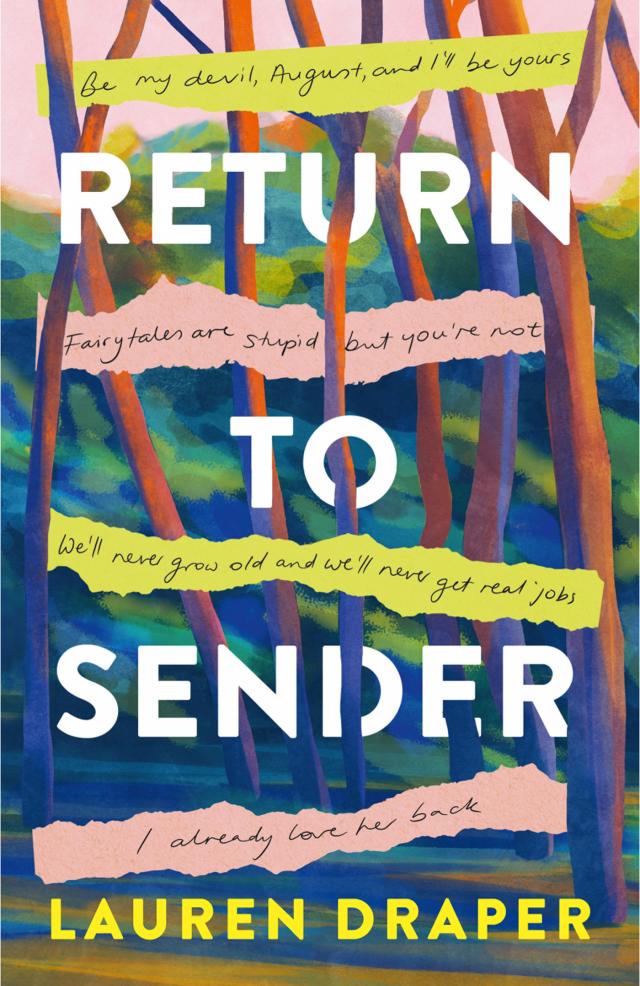
ABOUT RETURN TO SENDER
After three years away, Brodie McKellon has returned to Warwick to live with her eccentric grandmother above a Dead Letter Office - the place letters go when no one is left to claim them.
But with her reputation as a troublemaker, things don’t stay quiet for long, and Brodie soon reunites with her childhood best friend, Elliot, and sidekick-turned-nemesis, Levi, to investigate an unsolved mystery: unclaimed letters from a group of friends who seemed to vanish without a trace nearly twenty years ago.
As Brodie, Elliot and Levi are drawn into the riddle of the dead letter writers, they discover that the past is never truly past, and that it’s never too late for old wrongs to be put right.
Also by Lauren Draper
The Museum of Broken Things
For my sister, Holly – here’s to a lifetime
of fighting dragons with you.
CONTENTS
Cover
About Return to Sender
Also by Lauren Draper
Title page
Dedication
Contents
Chapter 1
Chapter 2
Chapter 3
Chapter 4
Chapter 5
Chapter 6
Chapter 7
Chapter 8
Chapter 9
Chapter 10
Chapter 11
Chapter 12
Chapter 13
Chapter 14
Chapter 15
Quinn
Chapter 16
Chapter 17
Epilogue
Acknowledgements
About Lauren Draper
Copyright page
Newsletter
CHAPTER 1
I want to be very clear that I was not technically arrested.
Good old Detective Richard Sawyer just really enjoys hauling me down to the station.
And I mean, sure, I was trespassing. But that’s a stupid law. It’s not even a proper law – like, Don’t murder people. That’s a good law. Don’t embezzle money. Don’t litter. Fine. Whatever. Those all make sense.
But don’t cross Dwight’s junkyard to take the shortcut home? That’s just stupid. No one was even there. No one would have even noticed, except in the three years I’ve been gone, Dwight went and got himself some guard dogs that chased me up a two-metre wire fence. And then my pants got stuck.
It was not my most dignified moment: waiting to be rescued, two drooling German shepherds below, my favourite blue jeans slowly ripping in the butt, my backpack spewing snacks and clean undies, plus the few meagre possessions I managed to pack with me on the train.
Someone must have heard me yelling and called the police. The rookie cop who answered the call probably would have just let me go – she was laughing too much to even issue a ticket. But somebody must have snitched, because just as I was arranging my backpack so no one could see my butt through the tear, a flood of red-and-blue lights flashed across the junkyard and the detective’s car rolled in.
Anyway.
The Warwick Police Station is really just a room in the Town Hall with a reception area, a handful of desks and one single jail cell. The whole place is very dignified: plush blue carpets, gold doorknobs, antique tables holding proper china teacups and a shiny state-of-the-art coffee machine. There’s also a waiting area with some leather chesterfield lounges, where people sit while officers fill out reports for things like lost wallets, parking tickets, jaywalking. Nothing exciting. There’s never been a murder here, no assaults, no missing kids. Well. One. Doesn’t really count, though – it was twenty years ago. His poster is still on the wall, yellowed and illegible.
Because Detective Dick is kind of a jerk, he steers me away from the comfy old couches and makes me wait in the cell while they ‘consider arrangements’. Which is a total joke, because I can hear him on the phone to Dwight right now, and the office is quiet enough that I can hear Dwight yelling that they shouldn’t have woken him up at this damn indecent hour, and anyway, she didn’t take anything this time, did she?
I bristle with annoyance. This time? I never –
Oh. The old Jeep. Whoops.
I sigh, leaning back against the wall. Barbara hobbles over, passing me a cup of tea through the bars.
‘You want a biscuit, doll?’
I shake my head, stirring in the sugar cubes she’s given me. ‘Have you called my nan?’
She tut-tuts. Barbara has been here since I can remember. She’s about a thousand years old, and she’s spawned so many grandchildren that her family probably makes up half the town population. She’s also got a soft spot for delinquents.
‘She’s not answering. Might have the ringer off; it’s late.’
I shrug. ‘She didn’t know I was coming.’
Barbara tut-tuts again. ‘You shouldn’t be walking home in the dark.’
‘I’d be home by now if they’d just let me go,’ I grumble. Which is mean, because Barbara is only trying to be nice. She doesn’t know my family has shipped me off. Again.
Barbara shucks her cardigan and passes it to me. There’s little poodles knitted into it, their tails made of bushy pom-poms. It hangs nearly to my knees, so I’m all covered – and warm.
‘Thanks,’ I say, forcing a smile. ‘Is he gonna let me out soon?’
She snorts, glancing over at Richard. ‘I already called someone to come get you. He’s just in a mood today. Possums again, in the roof.’ She swings the cell door open. It wasn’t even locked. ‘Why don’t you sneak on out? Your ride will be here in a minute. Tell your nan I said hello.’
I grab my backpack, edging away to the rear exit. ‘Wait,’ I whisper, half hidden behind the watercooler. ‘Who’d you call?’
Barbara frowns, about to answer, but then I hear the sound of a phone receiver being slammed down and she trots over to the front desk, ready to intervene.
As far as accomplices go, Barb’s pretty great. I sprint to the exit, rushing out into the cool night.
Cold air hits me all at once, and just for a moment, I pause at the top of the station stairs, peering down at Warwick. There’s a fog over the town; it’s covered the valley like a blanket, edges frayed and thinning where the light fades. From here, it looks like a scene from an old black-and-white movie. Little houses, all lined in a row. The Rydal Woods to the south, train station to the north.
And not a whole lot else.
I can see the red slate roof of the post office from here, sitting proudly on Barney’s Hill. The windows are dark – Nan must be sleeping already. I sigh, dropping now-useless headphones over my shoulders. Guess it’s the long way home this time.
I pause halfway down the stairs, hesitating under the yellow glow of a streetlight. There’s an echo in the dark, an engine idling on the kerb. I don’t think it’s my ride – bless Barbara for trying, but I don’t really have any friends left. None that would pick me up from the police station, at least.
And then I see it.
The red car, front window down, one hand tapping a sharp rhythm on the metal, shirtsleeve rolled to the elbow.
‘Oh, fu–’
He sees me before I can turn around. The smile is too sweet, hiding a well-mannered hatred – all straight white teeth and dazzling blue eyes.
‘Well, if it isn’t the McKellon Felon,’ he says. ‘Nice jumper.’
I don’t answer.
He rolls his too-pretty eyes. ‘Get in, Brodie.’
‘What, so you can drive me into the woods and dump my body? No thank you.’
I turn onto the footpath, walking stubbornly beside the car as he eases his foot off the brake. ‘Barbara called me.’
‘I didn’t ask her to.’
‘Figured.’
‘Go away, Levi.’
‘Get in the car, Brodie.’
I continue stomping my way up Compton Road, cursing my too-thin shoes and dead phone battery. I resolve not to speak to him. He can follow me home in silence, watching the little poodle pom-poms bounce in the dark. Serves him right, for all those years ago.
Then the first raindrop hits.
I keep walking. He keeps pace, the car rolling forward at a crawl. More raindrops. I scoop wet hair out of my eyes, determined not to look at him, even though I think he just laughed a little. Then there’s a crack of lightning so bright it lights up the street like daylight. A thunderclap rolls in a few seconds later, so loud I can feel the rumble in my chest.
I sigh. He pops the door open.
And that’s how Levi Sawyer ends up driving me home.
Even though he hates me now.
Guess being a jerk runs in the family.
The Warwick post office is a grey-and-green-painted brick building; three stories high, leaning slightly to the left, with Gothic arched windows and a wrought-iron balcony that you can climb up if you are particularly desperate to get inside. Notably, there’s also a flaking blue sign out front, the paint curling from hot summer days and blustery winter nights. In the right light, you can still see the original stencil: THE DEAD LETTER OFFICE.
You’re not really supposed to call it that anymore. Officially, it’s the Warwick Mail Redistribution Centre, but that’s . . . a lot of syllables. And not nearly as entertaining.
I love it here. It’s a strange old house, with forgotten nooks and crannies, and even if it gets draughty in the wintertime, I never minded. Because this house is home, not the cramped apartment my dad bought in the city, not the boarding school I got kicked out of, and definitely not the university we toured last year.
I had managed to climb up the balcony last night, feet scrambling for purchase, cursing my lack of upper-body strength, until I heaved myself over the edge. The windows were unlocked, like they always are, though the hinges were sticky and groaned when forced open.
The house was dark inside, but it didn’t matter. I’ve never needed light to find my way through these halls. The carpet pressed under my shoes like a weary sigh, breathing Welcome back. Nan always says this place is alive. Actually, she says it’s haunted and ‘alive with spirits’, but that’s basically the same thing.
The gas heater in my old bedroom had spluttered to life as I dressed in too-small pyjamas, and I barely managed to plug in my phone before I collapsed on the bed and fell asleep.
Hours later, I wake up with sunlight streaming through the curtains I forgot to close and Nan perched on the end of my mattress; a heavy book balanced on one knee, ginger cat on the other.
I crack one eyelid open and smile.
‘Good morning,’ she says, adjusting her glasses so they sit straight on her nose. ‘What did you dream about?’
My eyes are crusty, my mouth feels like something died in it and I slept so deeply I’m not sure if I dreamed at all. I sit up, grimacing at the memory of Levi Sawyer’s stupid face as he drove away. ‘Snakes,’ I mumble.
She doesn’t even need to open the book. ‘That’s a good one. Forgiveness?’
I snort. ‘Definitely not.’
‘Hmm, betrayal then. Watch yourself.’ She leans over and kisses my nose. ‘You should have woken me.’
‘Sorry, it was late.’
‘You can always wake me up,’ she says, rising. Mabel, the geriatric old cat that just won’t die, leaps from her lap. Nan opens her arms and I fold myself into her hug. She smells like the powder she puts in her hair, and I nearly cry with exhaustion. ‘Doesn’t matter,’ she says, hands rubbing a soothing circle on my back. ‘I’m just glad you’re here.’
My heart cracks open a small fraction. ‘I missed you.’
She pats my cheeks, clucking as she finds them thinner than the last time I came to visit. ‘How long are you staying?’
‘Uh . . .’
She cocks an eyebrow. ‘Does your father know you’re here?’
‘Yeah. He . . . he’s gone again. Contract work, interstate.’
‘And school?’
‘Would you believe me if I said “spontaneous combustion”?’
Nan glances up at the ceiling, looking for divine intervention. ‘Lord help me. Pancakes or eggs?’
‘Really? That’s it?’ No lecture? No questions? Unless Dad called her already . . . though I don’t see how he would have had the time between packing his bags and driving to the airport, not even bothering to clear out the fridge or drop me at the station.
Nan holds my cheeks in her hands for a long moment. ‘You can always come home,’ she says. ‘Always.’ Her face has more wrinkles than I remember. Her hair is a salt-and-pepper coif, more salt now than it used to be. I haven’t seen her since two Christmases ago, when Dad shipped me to Rowley and the airfares got too expensive to keep coming back.
I swallow against the lump in my throat, squeezing her hands. ‘I know.’
‘Good. Eggs then? Mabel likes eggs, don’t you, old girl?’
‘Sure,’ I answer, following her down the hall. She makes me sit at the breakfast bench while she chats happily about the things I’ve missed. There’s not a whole lot, as it turns out. The school got a new library. The museum got an old painting. The town council had a meeting about the lake, and now there’s a supervised swim hole. Some kid drowned in it, forever ago. Nan says something bad is going to happen again – she sees it in her cards. Nan is a very, um, spiritual person. She reads tarot and consults her dream book and talks to the ghosts in the attic. She says they linger until their letters are claimed. Unfinished business, she says.
I don’t actually believe in ghosts. Well. Much. The occasional phantom footstep when the house is empty does make me wonder. But I’m also pretty sure Nan had a really good time in the seventies, and I’ve resolved to never, ever ask about it.
I wait until I’ve politely scoffed the eggs she makes, watching as Mabel mews at my feet. Nan got her just before I was born. As such, Mabel is considered my senior, and commands a certain level of respect. I scruff her ears, and her rheumy eyes look at me petulantly until I give her a toast crust (can she eat toast? Does she have enough teeth left? If I kill her, Mabel would haunt me forever).
I watch her carefully, to make sure she doesn’t choke, while Nan washes the iron skillet.
‘You can head downstairs, if you like,’ she says. ‘I know you want to.’
I grin and slide off the bar stool, racing down the corridor to the bottom floor. It’s split into two sides: the ‘regular’ post office, with letters, postcards, envelopes, overpriced kids’ toys at the counter alongside online orders waiting to be picked up.
And then there’s the Dead Letter Office.
Sorry, Mail Redistribution Centre.
There’s a pretty strict law that says you can’t claim someone else’s mail – mostly so you can’t, you know, steal someone’s identity or their new flat-screen TV. But the Dead Letter Office is where unclaimed, undeliverable mail goes, usually because the intended recipient has kicked the metaphorical bucket.
It was a popular thing after the war, mostly, given all the soldiers who never made it home. Women were deemed more trustworthy with private affairs, so Nan found herself in charge of the Warwick centre. Most big cities share one huge warehouse now, and you have to drive out for ages to visit. But Warwick clung on to this strange old custom, so we have our very own. There’s less and less mail these days – mostly because technology has improved so much and not many letters get sent anymore – but every so often, someone will come in and collect their grandparents’ mail, or old Christmas cards, or little gifts that are still perfectly wrapped. Usually people cry, for the moments that were unfairly snatched away. Birthday cards for a birthday that never happened. Baby photos that were never seen.
But sometimes they laugh. All those envelopes hold a little piece of life inside. Handwritten words that someone cared enough to write down. A thought or a joke or a lover’s words, captured forever, declared with pride.
I love it in here.
Nan left this room exactly like it was when it first opened: dark wooden shelves, gold key-locked drawers, green-leather reading chairs. It’s warm and dusty and cozy. The kind of place where you’d want to cherish last moments.
My fingertips drift over some new arrivals: letters rescued and waiting to be returned. There’s a custom stamp on one envelope, and I wonder who will collect it and whether they’ll smile. Not much else, though: a postcard from the beach, a parcel with Christmas tape. Small moments, a few words – but they mean so much to the people who collect them. Waiting in their cubbies, ready to be claimed.
Except for one.
I hear the soft pad of her slippers behind me as I turn and ask the question that’s been on my mind since I first stepped off the train last night. ‘No one claimed them yet?’
‘Poppet, I would have called the moment it happened. They’re still there – though for what it’s worth, I still think it’s none of your damn business.’
She drifts toward the register, stabbing a few buttons and muttering about receipt paper, while I edge toward the only box that’s never been claimed: Item 130: First name: August. Surname: Undeclared.
Still here. Still ours, for now.
I guess you’d call them love letters. But not really. There’s no sordid descriptions or crude euphemisms. They’re more intimate than that, filled with hopes and dreams and desires, secrets whispered between best friends at midnight. There are at least three writers, a boy and two girls, but I think they’re all using fake names. Maybe that’s why we’ve never been able to find their families; I searched town registries, microfiched the old library newspapers, trawled the internet and even tried to convince Barbara to use the police database. Nothing. I don’t even know what year I’m looking in, because they never wrote them down – only the day and month, or not at all.
I snatch up an envelope at random, and it’s like dipping into a story halfway.
Dear Winnie,
Do you think I could build a house in the woods? I’d make it so tall you could see all the way across the lake – all the way across the world, in a room made of glass. Would you come with me? You can pick any room you want, and it’ll be all yours. You can fill it with books and paintings, and we’ll live there forever, until the townsfolk forget we’re even people, and they’ll think a couple ghosts built it all.






